 200 E. 30th Street, Kansas City, MO 64108, USA.
 +1 (816) 7723095

In large-scale industrial operations, efficiency, product protection, and consistent packaging quality are critical. Industrial chamber vacuum sealers are designed to meet these needs, offering robust performance for businesses handling high-volume products. Unlike smaller tabletop or nozzle-type sealers, chamber vacuum sealers can handle bulkier items and large batch packaging, making them ideal for food processing, medical products, electronics, and other industrial applications.
An industrial chamber vacuum sealer is a machine where both the product and bag are placed inside a vacuum chamber. Once the lid is closed, the machine removes air from the chamber and seals the package using a heat bar. This method ensures a uniform vacuum, even for large, irregular, or multiple items at once. Many models also offer Modified Atmosphere Packaging (M.A.P.) and gas flushing for products that require extended shelf life.
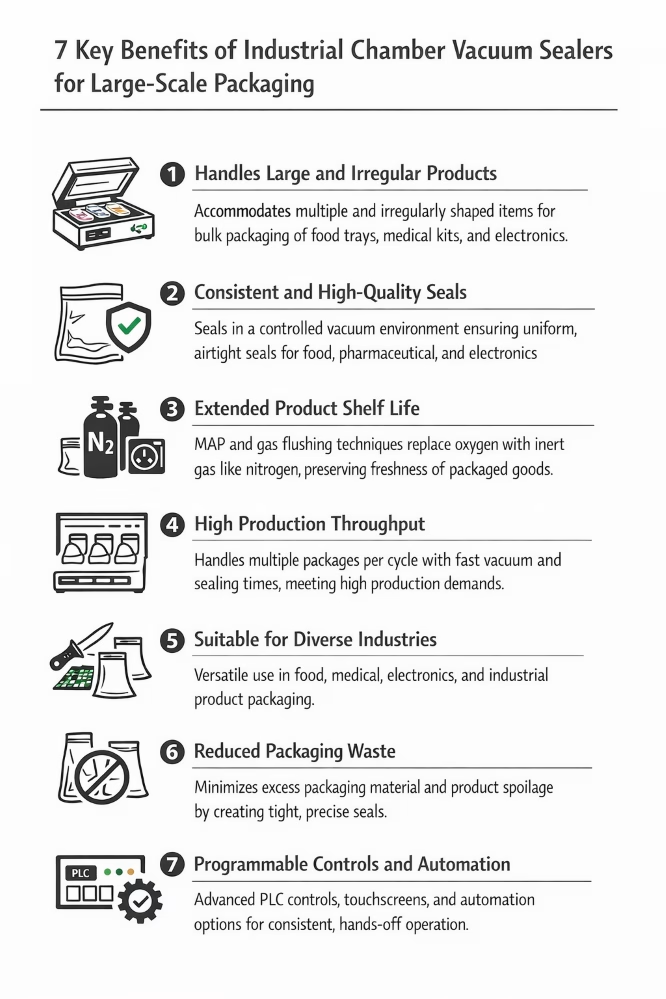
Industrial chamber vacuum sealers can accommodate items of varying shapes and sizes, including multiple products at once. This flexibility makes them suitable for bulk packaging, food trays, medical kits, and electronic components without compromising vacuum quality.
By sealing in a controlled vacuum environment, these machines ensure every package receives a uniform, airtight seal. This reduces the risk of leakage, contamination, or spoilage, which is essential for sensitive products in food, pharmaceutical, or electronics industries.
Many industrial chamber vacuum sealers support gas flushing and M.A.P. techniques, which replace oxygen with inert gases like nitrogen. This process preserves product freshness, slows oxidation, and extends shelf life for packaged goods, making them ideal for long-term storage or distribution.
Industrial models are built for continuous operation, allowing multiple packages to be sealed per cycle or per hour. Fast vacuum and sealing cycles help manufacturers meet high production demands efficiently while reducing labor costs.
These machines are versatile and widely used across multiple sectors:
By precisely removing air and creating tight seals, industrial chamber vacuum sealers minimize the amount of packaging material needed. They also reduce product loss due to spoilage or damage, contributing to sustainable and cost-efficient operations.
Advanced chamber vacuum sealers often feature PLC controls, touch screens, and programmable sealing cycles. Operators can store custom settings for different products, ensuring repeatable, consistent results across batches. Some models also integrate with automated production lines for fully hands-off operation.
Selecting the right industrial chamber vacuum sealer is critical for maximizing efficiency, protecting products, and minimizing operational costs. Businesses should carefully evaluate their production requirements, product types, and packaging materials to ensure they invest in a machine that meets both current and future needs.
When choosing a chamber vacuum sealer, consider the following factors:
By evaluating these factors, businesses can select a chamber vacuum sealer that not only fits their current production needs but also scales with growth, ensures product protection, and enhances operational efficiency.
Industrial chamber vacuum sealers are essential for businesses that require high-volume, reliable, and versatile packaging solutions. From extended shelf life to faster throughput, consistent seals, and reduced waste, these machines improve production efficiency across industries. Whether for food, medical devices, electronics, or industrial goods, chamber vacuum sealers are a strategic investment that delivers measurable operational benefits.
A chamber vacuum sealer places both the product and bag inside a chamber, while a nozzle sealer pulls air directly from the bag. Chamber sealers are better for bulk or irregular products, whereas nozzle sealers are ideal for smaller or sensitive items.
Yes. Chamber sealers can accommodate several bags or large trays simultaneously, improving throughput and efficiency.
Yes. Many models offer Modified Atmosphere Packaging (M.A.P.) options, which use nitrogen or other inert gases to extend product shelf life.
Yes. Stainless steel construction, easy-to-clean surfaces, and controlled vacuum processes make them suitable for sterile environments.
No. Regular cleaning of the chamber, seals, and vacuum pumps, along with routine inspection of gaskets, is sufficient to maintain reliable performance.
We hope you find this article helpful. The content provided is for general information purposes only. Readers are encouraged to verify product specifications, compliance requirements, and suitability for their specific applications with the relevant manufacturers or certified professionals. While we strive for accuracy, we cannot guarantee that all information is error-free. NASAVAC assumes no responsibility for any errors or omissions.
