 200 E. 30th Street, Kansas City, MO 64108, USA.
 +1 (816) 7723095

Selecting a medical vacuum sealer for clinical environments is a strategic decision that impacts sterile processing efficiency, packaging consistency, and overall hospital workflow reliability. Healthcare facilities must ensure that the equipment chosen supports strict operational standards and long-term performance requirements.
Below are the key factors to evaluate before making a procurement decision.
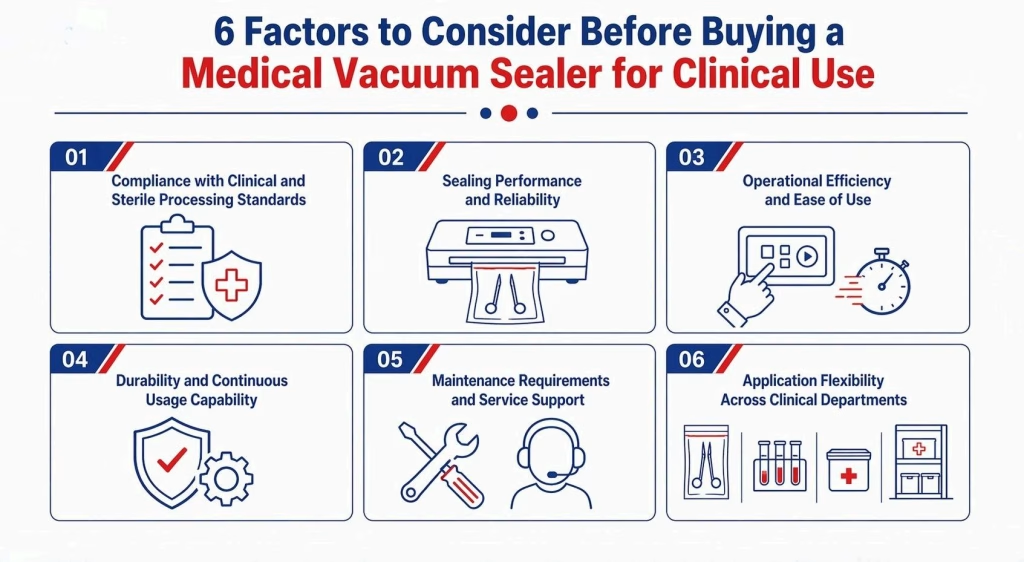
A medical vacuum sealer must meet healthcare packaging and sterilization requirements to ensure safe and consistent use in clinical environments. Compliance ensures that all sealed instruments align with hospital protocols and sterile processing guidelines.
Key considerations:
Sealing consistency is essential in healthcare environments where packaging integrity directly affects workflow efficiency and instrument safety. A reliable system reduces reprocessing and operational disruptions.
Key considerations:
Clinical staff require equipment that is fast, intuitive, and easy to operate. A medical vacuum sealer should improve workflow speed without adding complexity to daily operations.
Key considerations:
Hospital environments demand equipment that can operate continuously without performance loss. Durability ensures consistent output and reduces downtime in critical workflows.
Key considerations:
Maintenance plays a major role in ensuring long-term reliability. Hospitals must evaluate how easily the system can be maintained and whether support is readily available.
Key considerations:
A versatile medical vacuum sealer provides greater value by supporting multiple hospital applications. This improves equipment utilization and overall workflow efficiency.
Key considerations:
| Factor | Importance in Clinical Use | What to Look For |
|---|---|---|
| Compliance | Ensures safe and approved usage in hospitals |
Meets sterilization and packaging standards |
| Sealing Performance |
Prevents packaging failure and contamination risks |
Strong, consistent, and stable sealing output |
| Ease of Use | Improves staff efficiency and workflow speed |
Simple interface and fast operation |
| Durability | Supports continuous hospital operation |
Long-lasting build and stable performance |
| Maintenance | Reduces downtime and repair delays | Easy servicing and available support |
| Flexibility | Expands usage across departments | Multi-application capability |
Nasavac provides medical vacuum sealing systems designed for reliable performance in clinical and sterile processing environments. The focus is on consistency, durability, and practical usability in healthcare operations.
Key reasons to choose Nasavac include:
Nasavac solutions, including the MPT Series, are developed to support healthcare facilities that require dependable packaging performance and operational consistency.
A reliable medical vacuum sealer can help improve consistency, efficiency, and control in sterile processing environments. Nasavac provides solutions designed to support healthcare facilities with dependable performance and practical workflow integration.
Choosing a medical vacuum sealer for clinical use requires careful evaluation of performance, compliance, and operational fit. Each factor plays a role in ensuring efficient sterile processing workflows and long-term reliability in healthcare environments.
A well-selected system enhances consistency, reduces operational risk, and supports better overall hospital productivity.
A medical vacuum sealer is used to package sterilized instruments in an airtight environment to help protect them from contamination, moisture, and handling exposure before use in clinical procedures.
It should be designed for healthcare environments, provide consistent sealing performance, and support sterile processing workflows. Hospitals also look for reliability, ease of use, and compliance with internal sterilization standards.
A medical vacuum sealer is built for clinical-grade applications, offering higher consistency, stronger sealing reliability, and suitability for sterile instrument packaging, unlike regular household or food-grade machines.
Maintenance frequency depends on usage volume, but most clinical systems require routine cleaning and periodic servicing to ensure consistent performance and prevent operational downtime.
Hospitals use vacuum sealing to improve packaging consistency, reduce exposure to environmental contaminants, and maintain organized sterile storage systems across different clinical departments.
We hope you find this article helpful. The content provided is for general information purposes only. Readers are encouraged to verify product specifications, compliance requirements, and suitability for their specific applications with the relevant manufacturers or certified professionals. While we strive for accuracy, we cannot guarantee that all information is error-free. NASAVAC assumes no responsibility for any errors or omissions.
